Sports Research
Organic Ashwagandha KSM-66EDE Score
89/100
Verdict
Buy
CPED
$0.30 / effective day/day
Best value
Form
capsule
Ashwagandha comparison
Ashwagandha (Withania somnifera) is the most-studied adaptogen for cortisol reduction, sleep quality, and stress resilience. Two patented standardizations dominate the premium tier: KSM-66 (Ixoreal Biomed, 5 percent withanolides, root-only extract) and Sensoril (Natreon, 10 percent withanolides, root + leaf extract). The clinical effective dose is 300-600 mg/day for KSM-66; 250-500 mg/day for Sensoril.
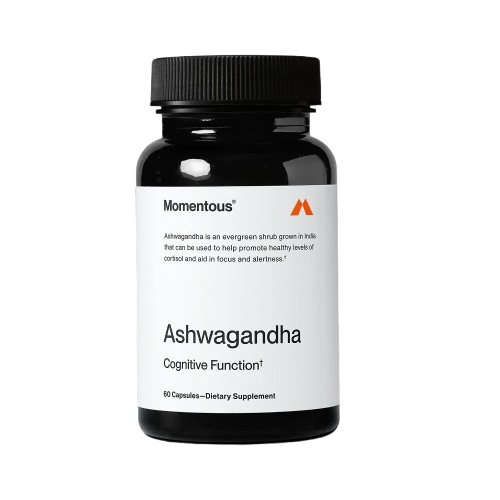
Both products in our catalog use KSM-66, the form with the broadest evidence base for testosterone support and cortisol modulation in men 40+.
Editor's Pick
Sports Research
EDE Score
89/100Verdict
CPED
$0.30 / effective day/day
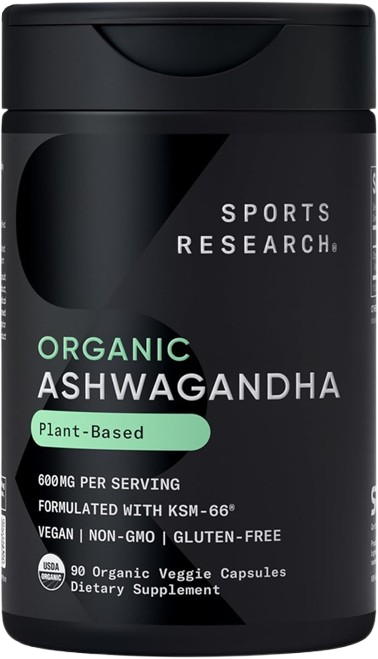
Sports Research Organic Ashwagandha uses 600mg KSM-66 (5% withanolides HPLC standardized) at the top of the clinical range, USDA Organic certified, single-ingredient formulation. We score it 89/100. CPED $0.30/day. Strong BUY runner-up to NSF Certified for Sport alternatives.
Sorted by EDE Score (highest first). Tap a product name to read the full review.
Sports Research
Organic Ashwagandha KSM-66EDE Score
89/100
Verdict
CPED
$0.30 / effective day/day
Best value
Form
capsule
EDE Score
88/100
Verdict
CPED
$0.42 / effective day/day
Form
capsule
| Product | Verdict | EDE | Form / Dose | CPED | Cert |
|---|---|---|---|---|---|
| Buy | 89/100 | capsule1 capsule | $0.30 / effective day/day Best value | Standard |
| Buy | 88/100 | capsule1 capsule | $0.42 / effective day/day | NSF Sport |