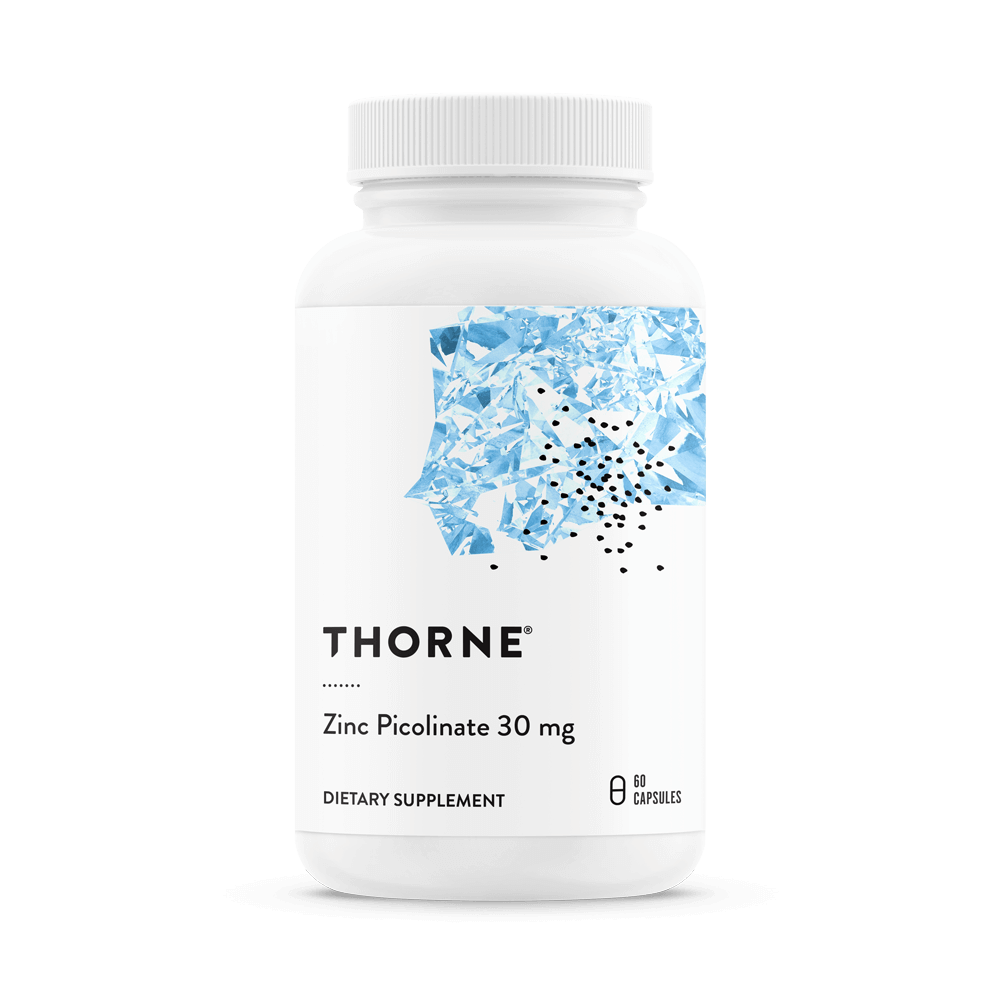
Thorne
Zinc Picolinate 30 mgEDE Score
94/100
Verdict
Top pick
CPED
$0.33 / effective day/day
Form
capsule
Zinc comparison
Zinc is a foundational mineral for testosterone synthesis, immune function, and wound healing. The clinical effective dose is 15-30 mg/day; the NIH Upper Limit is 40 mg/day to prevent copper deficiency from zinc-copper antagonism. Form quality matters: chelated zinc (picolinate, glycinate, bisglycinate) absorbs at 50-60 percent versus zinc oxide at 25-35 percent.
We compared 3 products across the picolinate, glycinate, and bisglycinate forms. The TOP PICK uses the picolinate form at the appropriate clinical dose with NSF Sport availability for athletes.
Top Pick
Thorne
EDE Score
94/100Verdict
CPED
$0.33 / effective day/day
Thorne Zinc Picolinate 30 mg hits the clinical effective range, uses one of the most bioavailable zinc forms, and is NSF Certified for Sport. We score it 94/100. CPED $0.33/day.
Best Value
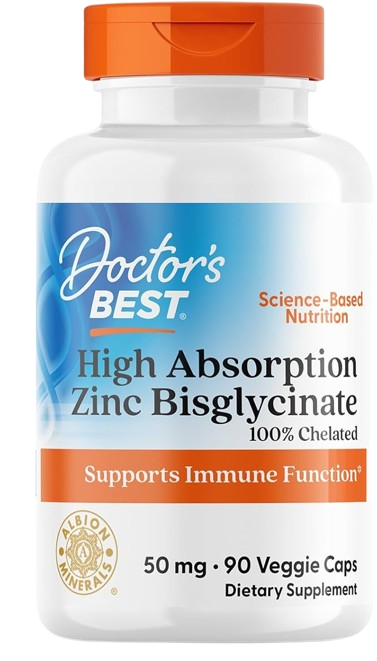
Doctor's Best
High Absorption Zinc Bisglycinate, 100% Chelated, 50 mg (90 Veggie Caps)Approximately $58/year cheaper than the Top Pick at clinical full dose.
Read full review →Sorted by EDE Score (highest first). Tap a product name to read the full review.
Thorne
Zinc Picolinate 30 mgEDE Score
94/100
Verdict
CPED
$0.33 / effective day/day
Form
capsule
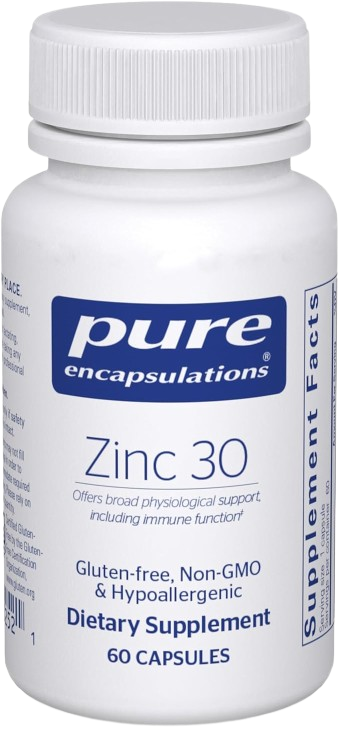
Pure Encapsulations
Zinc 30EDE Score
89/100
Verdict
CPED
$0.42 / effective day/day
Form
capsule
EDE Score
82/100
Verdict
CPED
$0.17 / effective day/day
Best value
Form
capsule
| Product | Verdict | EDE | Form / Dose | CPED | Cert |
|---|---|---|---|---|---|
| Top pick | 94/100 | capsule1 capsule | $0.33 / effective day/day | Standard | |
| Buy | 89/100 | capsule1 capsule | $0.42 / effective day/day | Standard |
| Buy | 82/100 | capsule1 capsule | $0.17 / effective day/day Best value | Standard |